

De-Escalation Training In Boston
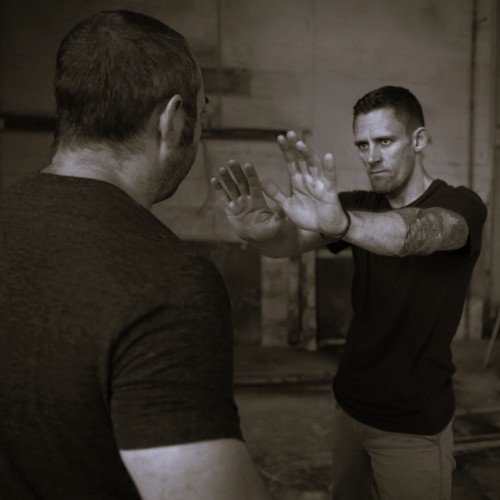 Most acts of violence are the result of normal, everyday social interactions that have caused people to become angry e.g., disputes over parking spaces, arguments over who was first in a line,
having a drink accidentally spilt over somebody etc. In all of these types of engagements neither party entered into the interaction with any premeditation to cause harm to the other party.
This doesn’t necessarily mean that either individual involved didn’t have a predisposition to solve a potential dispute violently, but rather it is the interaction itself which causes them to
become aggressive. This makes this type of violence very different to that used by a mugger or rapist who enters the scene with the premeditated, express means of using force and acting violently.
This is why we refer to this type of violence as being spontaneous rather than premeditated, i.e., nobody pre-planned to act violently, the trigger was an external event rather than an internal
drive.
Most acts of violence are the result of normal, everyday social interactions that have caused people to become angry e.g., disputes over parking spaces, arguments over who was first in a line,
having a drink accidentally spilt over somebody etc. In all of these types of engagements neither party entered into the interaction with any premeditation to cause harm to the other party.
This doesn’t necessarily mean that either individual involved didn’t have a predisposition to solve a potential dispute violently, but rather it is the interaction itself which causes them to
become aggressive. This makes this type of violence very different to that used by a mugger or rapist who enters the scene with the premeditated, express means of using force and acting violently.
This is why we refer to this type of violence as being spontaneous rather than premeditated, i.e., nobody pre-planned to act violently, the trigger was an external event rather than an internal
drive.
In most cases, interactions which cause an angry reaction/response don’t become violent e.g., most disputes may involve an exchange of angry words, with neither party looking or wanting the incident to become physical, however in some cases anger may turn to rage, which may lead to physical violence. If somebody can be prevented from moving from an angry state to a rageful one, where violence becomes somewhat inevitable, this process can be avoided and violence avoided. This is the purpose of effective de-escalation training. De-escalation is not about solving the underlying issue that caused the verbal confrontation but rather it is about reducing the emotion in the interaction so that somebody doesn’t move from anger to rage, and then from rage to violence.
De-escalation is primarily about effective communication. Whenever we say something, we formulate a message that communicates information along with our identity, which is formed around our perception of how we believe the other person sees us. This complex process is performed subconsciously, as is the way that the message/communication/information is interpreted i.e., based on their interpretation of the message along with their own identity and perception of how they are seen by the person talking to them etc. When people are in a calm and rational state of mind miscommunication can easily occur, however when somebody is angry/emotional the chances of this happening heighten significantly. Learning how to effectively communicate with angry people in a way that removes emotion from an aggressive/angry interaction is not something we do naturally/instinctively.
The ethologist and noble prize winner Konrad Lorenz put forward the idea that the reason humans don’t have rituals that de-escalate confrontations, like most other social mammals, is because at the time in our evolution when we would have been developing such rituals, we didn’t have the physical capabilities to significantly harm each other – we lacked strong teeth, claws and were yet tool builders – which meant if we were to get into a “fight” with each other, the physical consequences would be limited. This wouldn’t be the case with dogs in a wolf pack who could seriously injure or kill each other; something which could compromise the survival of all members of the pack, as each pack-member would be needed to hunt and obtain food for itself and others. Lacking these rituals, humans are not particularly well skilled or versed at extracting themselves or allowing others to extricate themselves from angry, emotional confrontations. This is why de-escalation training is so important.
We offer de-escalation training in Boston to our corporate clients, as well as incorporating it de-escalation solutions into our regular self-defense/Krav Maga classes.